

Mobile Manipulators Go Global: What It Takes to Put an Arm on Wheels
Elite Robots' CE-compliant mobile manipulators show the technology maturing. Site readiness and tooling now decide success.
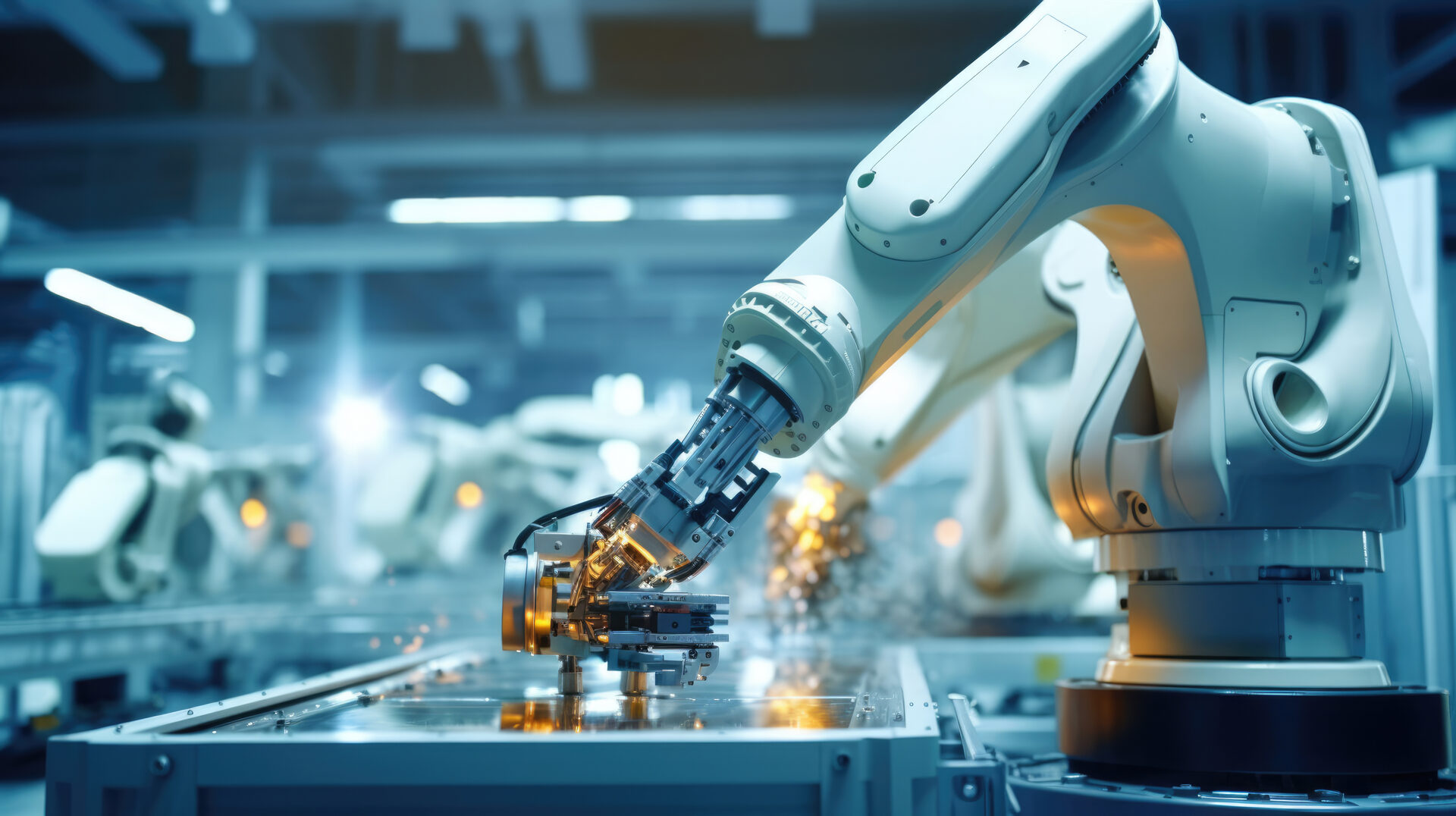
Elite Robots announced on November 16 that its ELITEMISSION mobile manipulators, developed by subsidiary Mission Robots, are now CE compliant, a step the company calls a milestone in its international expansion, according to its PR Newswire release. The systems pair a collaborative arm with an autonomous mobile base for machine loading, component handling, and material transfer between production stages. For operations leaders, the news is another sign that mobile manipulation is moving from demo booths toward real production cells, and that the hard work is shifting from the robot itself to the site it has to live in.
What Was Announced
According to the release, the ELITEMISSION line targets automotive, electronics, semiconductor, and new energy production. Elite Robots highlights integrated vision, unified control interfaces, and navigation and coordination tools meant to connect with existing manufacturing systems. CE compliance matters because it is the baseline for placing machinery on the market in the European Economic Area. It does not, however, certify a finished application. The arm, the gripper, the part, the fixture, and the surrounding traffic still have to be assessed together at each site.
Why Mobile Manipulation Is Harder Than It Looks
A fixed robot cell has one known relationship between the robot base and the work. A mobile manipulator rebuilds that relationship every time it docks. Small errors in base position become large errors at the tool tip, so most deployments depend on a localization step at each station, often a vision fiducial or a mechanical docking feature. Other common friction points include:
- Floor and facility conditions: slopes, expansion joints, and dock plates that affect navigation and arm accuracy.
- Network coverage: Wi-Fi dead zones that stall a mission or delay fleet coordination.
- Charging and uptime: battery cycles that have to be scheduled around shift demand, not added afterward.
- Shared space safety: a moving base plus a moving arm changes the risk assessment compared with a fenced cell or a standalone AMR.
The Tooling Question
A mobile manipulator that serves several machines usually handles several parts. That puts pressure on end-of-arm tooling. Teams have to decide between a universal gripper, a tool changer, or dedicated fingers per station, and each choice affects payload margin, cycle time, and recovery when a pick fails. Gripper weight is especially important on collaborative arms, where every gram on the tool comes out of the usable payload.
Scaling Beyond the First Unit
The first mobile manipulator in a building is a pilot. The fifth is an operations problem. Map updates, software versions, spare parts, and station calibration all have to stay consistent as units multiply, and more so when the same design rolls out to plants in different countries. A standard that covers commissioning steps, acceptance tests, and site readiness checks keeps the tenth installation from being as slow as the first.
What It Means for Your Project
If a mobile manipulator is on the roadmap, the vendor choice is only one decision. The bigger questions are whether each station can be located repeatably, whether the floor and network will support it, and how the tooling handles part variation. Emtech supports this kind of program across several service lines: Lab for site and network readiness, EOAT for grippers and tool changers built for mobile payload limits, Testing for docking repeatability and cycle validation, and Deployment for commissioning and multi-site rollout. Starting with a readiness review and a defined acceptance test is a practical way to turn a promising demo into a cell that runs every shift.
Building toward production-grade automation?
Tell us where you are in your project and we will line up the right team, from R&D through live operations.
Start the Conversation