

Q3 Robot Orders Rose Nearly 25%: Planning for What Comes After the PO
A3 data shows North American robot orders rose 24.8% in Q3 2026. What operations leaders should plan for between purchase and production.
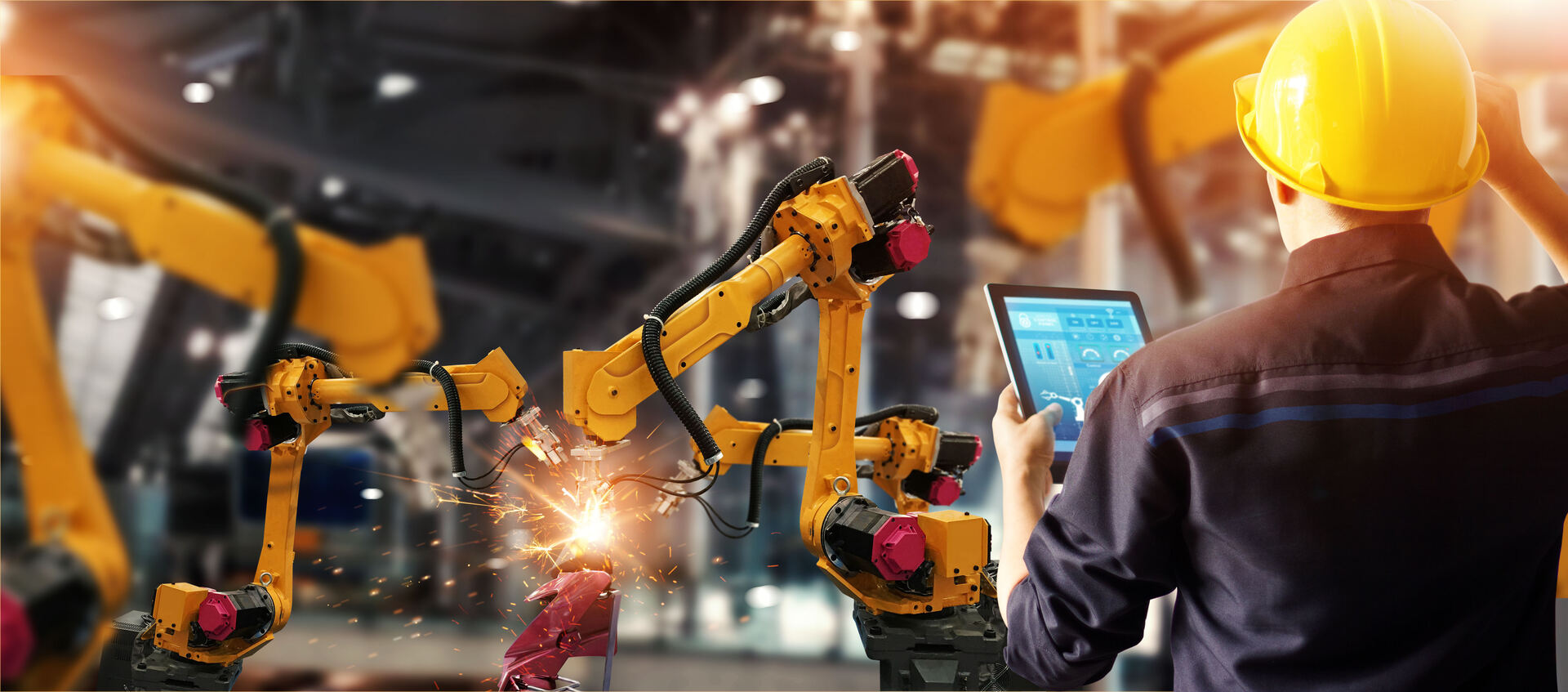
North American companies ordered 10,989 industrial robots in the third quarter of 2026, a 24.8% increase over the same period last year, according to A3 data reported by Manufacturing Dive. Order value rose 26.1% to $723.5 million, making Q3 the strongest quarter of the year. For operations leaders, the more useful question is not how many robots were bought, but how many of them will be running at rate on schedule.
A3 executive vice president Alex Shikany noted that what stands out is how broadly the growth was distributed across the market. That breadth matters, because it means demand for integration, commissioning, and support work is rising in many industries at once.
Where the orders came from
According to Manufacturing Dive's summary of the A3 release, the sharpest year-over-year gains came from:
- Semiconductor and electronics: up 97.6%
- Automotive components: up 90.4%
- Plastics and rubber: up 67.7%
- Life sciences: up 38.7%
- Metals: up 37%
Automotive OEM orders rose 7.5% after a 25% decline in the first half, while food and consumer goods orders fell 23.7%. Collaborative robot orders grew 56%, reaching 1,831 units and 16.7% of all units ordered in the quarter.
The gap between a purchase order and a running cell
A robot order is the start of a project, not the end of one. Between delivery and stable production sit tooling design, fixture and part presentation, controls integration, network and safety setup, commissioning, operator handoff, and the first months of troubleshooting. When order volume climbs across several sectors at once, the people who do that work get stretched. Integrators, OEM field teams, and in-house controls staff all draw from the same limited pool of experienced engineers.
Teams that planned capacity around last year's order levels may find that the robot arrives on time while the cell does not. The schedule risk usually sits in the integration and validation phases, not in the hardware lead time.
Different sectors, different failure points
The industries leading this quarter's growth bring their own demands. Semiconductor and electronics lines run tight tolerances and often require custom end effectors for small, fragile parts. Life sciences programs carry documentation and validation requirements that add weeks if test protocols are not planned early. Automotive component suppliers frequently need the same cell replicated across multiple plants, which turns a single integration project into a deployment logistics problem.
The cobot share deserves attention too. Collaborative robots are often bought with the expectation of fast, simple setup. In practice, the arm is rarely the hard part. Gripper selection, part variation, and how the cell fits into existing material flow decide whether a cobot delivers the expected throughput.
Questions to ask before the robot ships
- Who owns tooling design, and has it been tested against real production parts, including the worst ones?
- Is there a written test plan with acceptance criteria tied to throughput and uptime, not just "it runs"?
- Are site network, power, and safety requirements confirmed before installation day?
- If the cell will be replicated, is the build documented well enough that the second site goes faster than the first?
- Who supports the cell after handoff, and how quickly can they diagnose a controls or embedded fault?
What it means for your project
A strong order quarter is good news for manufacturers modernizing their lines, but it also raises the stakes on execution. Emtech works inside customer programs at exactly these handoff points: designing and validating end-of-arm tooling through its EOAT team, building test plans and acceptance data through its Testing group, and handling installation, commissioning, and multi-site rollout through Deployment. Its Reliability engineers focus on root cause across controls and embedded systems once a cell is in production. Planning those phases alongside the robot purchase, rather than after delivery, is the most reliable way to turn a purchase order into output on schedule.
Building toward production-grade automation?
Tell us where you are in your project and we will line up the right team, from R&D through live operations.
Start the Conversation